Why Your Toilet Gurgles When the Shower Drains and How to Fix It
October 30, 2026
QUICK ANSWER: A toilet gurgles when the shower drains because air that should leave through the plumbing vent system is being pushed or pulled through the toilet trap instead. The usual causes are a partial clog in the shared branch line, a blocked roof vent, or a restriction in the main sewer line. If the gurgle repeats every time the shower runs, and especially if other drains are slow, the cause is almost always downstream of the toilet and shower, not in either fixture. A camera inspection followed by cable or hydro jetting service clears the restriction and shows what caused it.
You step out of the shower, and from the next room comes a low bubbling noise. The toilet is gurgling, and nobody has touched it. Maybe it happens every morning now. Maybe it started last week, and last night the sound came with a faint sewer smell.
That noise is not random. It is the plumbing telling you that water and air are fighting over the same pipe. We have spent more than 25 years tracing that sound back to its source in homes and businesses around Mooresville and Charlotte, and the explanation is almost always the same: something downstream is narrowing the pipe, and the toilet is the weakest point where the air can escape.
Here is what is actually happening inside your walls, how to tell the likely causes apart, and what a proper fix looks like.
What a Gurgling Toilet Is Really Telling You
Every drain in your home needs two things to work well: a path for water to leave, and a path for air to move in and out. When the shower empties, a column of water rushes down the drain line. That water pushes air ahead of it and pulls air in behind it. If the air has nowhere to go, it finds the nearest opening.
The nearest opening is often a toilet. A toilet holds a standing pool of water in its trap, the curved passage just behind the bowl. That water seal keeps sewer gas out of your house. When pressure builds in the line, air forces its way through that water in bubbles. That is the gurgle you hear.
So the gurgle is not a toilet problem. It is a pressure problem somewhere in the shared drain system. The toilet is simply where the symptom shows up.
How Your Home Moves Air and Water
Plumbing is built as a drain, waste, and vent system. The drain pipes carry water out. The vent pipes run up through the walls and out through the roof, giving air a way in and out so that water can flow freely. Each fixture also has its own trap that holds a small amount of water to block odors.
Without proper venting, water leaving a pipe creates suction behind it. That suction can pull water out of a trap, or it can slow the whole flow down. With a restriction in the line, the opposite happens. Air gets compressed in front of the blockage and pushes back toward the nearest fixture.
Both situations sound similar. Both produce gurgling. The difference lies in where the problem sits, and that decides what has to be done about it.
Cause One: A Partial Clog in the Shared Branch Line
In most houses, the shower, the bathroom sink, and the toilet in the same bathroom share a branch line before they join the larger drain that runs toward the main sewer. When that shared branch picks up a buildup of hair, soap residue, and toilet paper fibers, water slows down as it passes through.
A partial clog is easy to miss. The shower still drains. The toilet still flushes. But water moves through the narrowed spot like a crowd through a half closed door, and the air behind it has to go somewhere. The toilet gurgles.
Clues that point to this cause: the gurgle happens only when that bathroom's shower or sink runs; other bathrooms and the kitchen drain normally; the shower drain itself is slow or leaves standing water around your ankles.
A branch line clog is usually the easiest of the three to clear. A cable machine matched to the pipe size cuts through the buildup and pulls it out, and in some lines, jetting is the better choice because it scours the full pipe wall instead of just punching a hole through the middle.
Cause Two: A Blocked or Restricted Vent
Roof vents are open pipes, and open pipes collect things. Leaves, pine needles, bird nests, and wasp nests can all find their way into a vent opening. Around Lake Norman and the Charlotte suburbs, where mature oaks and pines shade so many homes, a vent opening on the roof is well placed to catch debris through fall and winter.
When a vent is partly blocked, air cannot move in behind the draining water the way it should. The system pulls air from the nearest source, which is often the toilet trap. You hear gurgling, and sometimes the water level in the bowl drops slightly after the shower runs.
Clues that point to this cause: the gurgle shows up after storms or heavy leaf fall; the toilet bowl water level rises or falls oddly; several fixtures gurgle, not only the one near the shower; drain lines are clear when tested directly, yet the sound continues.
TIP: A quick test is to run the shower while someone listens at the toilet, then run the bathroom sink alone and listen again. If only the shower triggers the sound, the problem sits in the shower side of the branch. If everything triggers it, the problem is further downstream or in the vent.
Vent work happens on the roof, and we do not recommend homeowners climb up there to check. A technician can usually separate a vent issue from a drain issue from the ground by watching how the system behaves and by running a camera through the drain line first.
Cause Three: A Restriction in the Main Sewer Line
This is the one worth taking seriously. Every fixture in your home eventually empties into one main sewer line that runs out of the house, crosses your yard, and connects to the municipal system. If that line is narrowing, every fixture feels it, and the toilet is often the first to say so.
What narrows a main line in our area:
Tree Roots
Roots seek moisture and can enter tiny pipe joints, then grow into dense masses that trap debris. Older clay and cast iron pipes are vulnerable.
Grease And Buildup
Cooking grease, soap, and wipes coat pipe interiors and catch debris. The passage gradually narrows until additional laundry or shower water causes blockage.
Shifting Soil
Clay soil expands when wet and shrinks when dry, moving pipes and creating low spots. These bellies hold water and solids, restricting normal flow.
Foreign Objects
Flushable wipes, paper towels, and feminine products resist breakdown like toilet paper. They catch on rough pipe areas and roots, eventually forming dense mats.
Clues that point to this cause: gurgling in more than one fixture, such as the toilet and a floor drain or tub; slow drains across different parts of the house at the same time; a sewage smell near a drain, in the yard, or around the cleanout; water appearing in the lowest shower or tub when you flush an upstairs toilet or run the washing machine.
A main line restriction does not repair itself. It grows. The gurgle is the early warning, and it is much better to hear it than to meet the problem as water on the floor.
Quick Checks You Can Do Safely
You do not need tools to gather useful information. These observations help a technician narrow things down on the first visit.
Test The Pattern
Note which fixtures gurgle and what operates simultaneously. A shower alone, shower plus washing machine, or every drain points toward different causes.
Test A Second Bathroom
Check another bathroom at the opposite end of the house. If it gurgles too, the restriction may involve the main line or vent.
Look At The Cleanout
Most homes have a capped cleanout near the foundation or yard. Standing water or sewer odors nearby should be documented without opening it.
Listen For Timing
Gurgling seconds after starting the shower suggests a nearby restriction. Gurgling after several minutes may indicate a restriction farther downstream.
WARNING: If sewage or gray water comes up through a shower drain, tub, or floor drain, stop running water in the house right away. Backed up wastewater is contaminated, so keep children and pets out of the area and avoid touching it with bare hands.
Why Plunging and Store Bought Fixes Fall Short
When a toilet gurgles, the first instinct is to grab a plunger. A plunger works on a clog in the toilet trap. It does nothing for a root mass twenty feet down the yard line, and it does nothing for a blocked vent.
Chemical drain products are a poor fit too. They sit in the pipe above the restriction, they do not break through roots, and they can leave caustic standing liquid that a technician then has to work around. A small hand auger can open the shower drain a short way, which sometimes quiets the gurgle for a week or two, but if the true restriction sits further down, the sound returns.
The pattern that tells us a quick fix has missed the real problem is repetition. The gurgle fades, then comes back. Each return is the same obstruction, a little more developed than before.
How We Find the Cause Before We Clear It
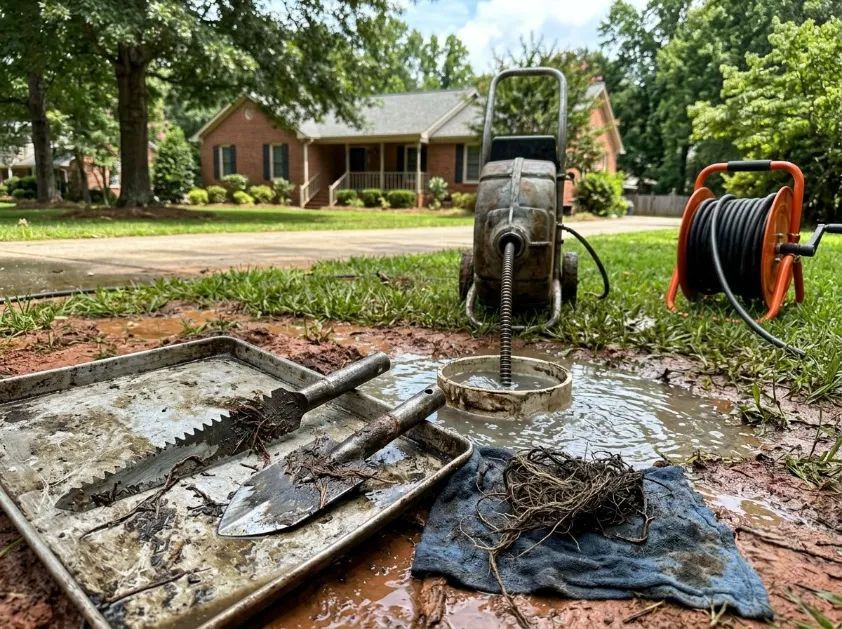
The most useful thing we do on a gurgling toilet call is look first. A waterproof video camera on a flexible cable goes into the line through the cleanout or a fixture opening. It shows us the pipe material, the joints, any root intrusion, grease or scale on the walls, low spots, and offset sections. A locating transmitter on the camera head lets us mark the exact spot on the ground above, so we know whether the restriction sits under the driveway, a flower bed, or the oak tree near the property line.
With that picture, the cleaning method matches the problem:
Cable Machine Service
A rotating cable with the proper cutting head breaks through root masses and solid blockages. It works especially well for localized clogs or root intrusion concentrated around one pipe joint.
Hydro Jetting
Our jetter sends water through specialized nozzles at pressures reaching 4,000 PSI, scouring pipe interiors. It removes grease, scale, and sediment, making it suitable for heavy buildup and restaurant-style grease.
Camera After Cleaning
We run the camera again after clearing the line to confirm the restriction is gone. The footage can reveal cracks, bellies, or offset joints that could cause future problems.
If the problem turns out to be a vent, we can tell you that too. A line that runs clear on camera, with a gurgle that continues, points the investigation toward the roof.
When the Same Sound Shows Up in a Business
Offices, retail spaces, and restaurants have the same plumbing logic with heavier use. A restroom toilet that gurgles when a mop sink or dish pit drains tells us a shared line is struggling. In a commercial kitchen, grease is the usual culprit, and the pattern is faster. A line that would take years to narrow in a home can narrow in months behind a busy kitchen.
Business owners tend to notice the gurgle during a rush, which is the worst time to find out. Treating an early gurgle as a reason to schedule a camera look and a cleaning, rather than a quirk to live with, keeps the problem from reaching customers.
Habits That Keep the Sound From Coming Back
A few household habits make a real difference to how fast a line narrows.
Put A Hair Catcher Over The Shower Drain
A hair catcher keeps strands from entering the drain, where they combine with soap residue, form mats, restrict water flow, and eventually create stubborn shower clogs.
Keep Wipes Out Of The Toilet
Do not flush wipes, even when labeled flushable. They can survive through household plumbing and catch on rough joints, gradually combining with other debris and causing blockages.
Keep Cooking Grease Out Of The Sink
Collect cooking grease in a container and discard it after hardening. Hot water only moves grease farther through pipes before cooling causes it to stick inside.
Pay Attention To Repeat Symptoms
One occasional gurgle after heavy laundry use may not indicate trouble. A gurgle returning weekly provides useful information that a developing drainage restriction deserves attention.
Schedule Periodic Cleaning For Older Lines
Older clay and cast iron sewer lines, especially near mature trees, benefit from periodic cleaning. Preventive service can address buildup and roots before recurring symptoms develop.
Frequently Asked Questions
Is a gurgling toilet an emergency?
Not by itself, but it deserves attention soon. If it comes with rising tub water, sewage odor, or drains that will not empty, treat it as urgent and stop using water.
Why does only the toilet gurgle and not the shower?
The toilet trap holds a pool of water directly in the path of displaced air, so it makes the loudest noise. The restriction usually sits further down the shared line.
Can a clogged vent really cause this?
Yes. A blocked roof vent keeps air from entering behind draining water, so the system draws it through the nearest water seal, often the toilet. This is more common in tree-covered areas.
Will the gurgling go away on its own?
Sometimes the sound fades when a partial blockage shifts. The cause usually stays in the pipe, and the gurgle returns, often louder. A growing restriction rarely clears itself.
Does heavy rain make gurgling worse?
It can. Wet ground presses on pipe joints and lets water seep into gaps, adding load to a line already near capacity. Root intrusion often shows its first symptoms after rain.
How do you know the problem is in the main line and not in my bathroom?
A camera shows it directly. Running it through the line reveals where the pipe narrows, what causes it, and how far from the house it sits, removing the guesswork before cleaning.
Is hydro jetting safe for older pipes?
Jetting pressure and nozzle choice are matched to the pipe material and condition. A camera inspection first shows whether the line can handle jetting or needs a gentler cable approach.
What a Gurgling Toilet Is Trying to Tell You
A gurgling toilet is one of the most useful warnings a plumbing system gives, because it shows up long before water ends up where it should not be. The sound points to trapped air moving past a restriction, whether that sits in a shared branch line, a blocked roof vent, or the main sewer line. Noticing which fixtures gurgle, when they gurgle, and how often the sound returns gives a technician a strong head start on finding the real cause.
Always Clear Sewer and Drain LLC
has spent more than 25+ years tracing this sound through homes and businesses in Mooresville and Charlotte, NC. A camera look first, followed by the cleaning method that fits the pipe, usually settles the question for good. Hair catchers, wipe-free toilets, and regular attention to older lines all help keep the restriction from returning. Handled while the problem is still small, a quiet nuisance never has to become a night spent mopping floors.
ADDITIONAL BeaRS STORIES